
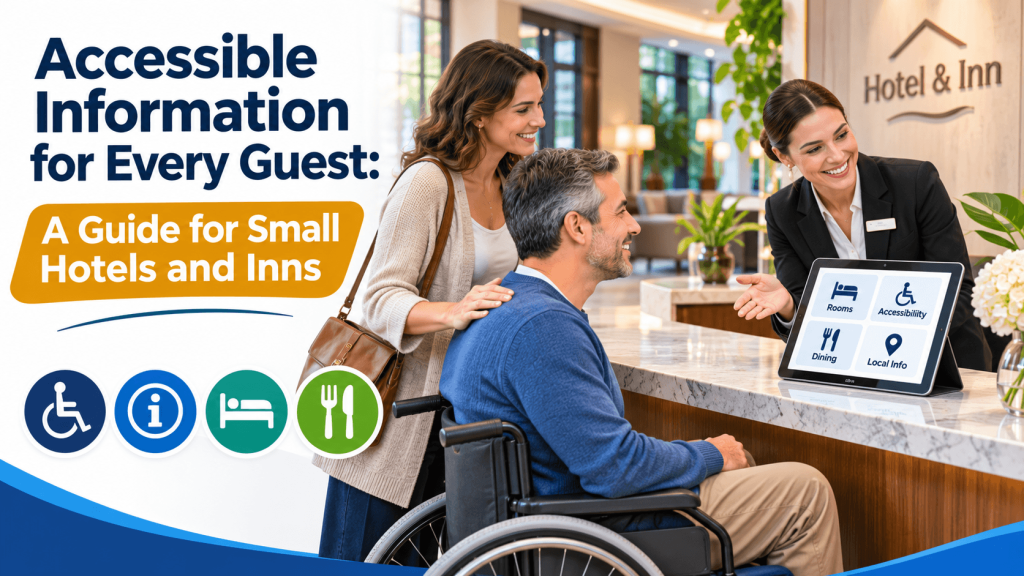
A traveler who uses a wheelchair is planning a weekend trip to a coastal town in Maine. She finds a charming inn with great reviews, but its website doesn’t say whether any rooms are on the ground floor, whether the entrance has steps, or what the bathroom looks like. She books somewhere else.
Small hotels, inns, and bed-and-breakfasts often provide excellent hospitality but leave out information many guests need to plan a stay with confidence and comfort.
Describe Accessibility Features Specifically
General phrases like "accessible rooms available" aren’t enough. Guests want details: step-free entrances, elevator access, doorway widths, roll-in showers, grab bars, bed heights, visual alarms, and accessible parking. Photos of accessible rooms and bathrooms are especially helpful. Mention what’s nearby, too, such as curb cuts, accessible beach paths, or restaurants with step-free entrances, since guests plan the whole trip, not just the room.
The Americans with Disabilities Act includes rules for lodging reservations, including identifying and describing accessible features in enough detail for guests to judge whether a room meets their needs. Review these requirements, or ask an advisor, to make sure your descriptions are complete.
Make Your Website Usable for Everyone
Accessible information also means an accessible website. Add descriptive alt text to photos, use readable fonts and strong color contrast, label booking form fields clearly, and make sure visitors can navigate with a keyboard. The Web Content Accessibility Guidelines (WCAG) provide a widely used standard for these improvements.
Test your booking process yourself, ideally on both a phone and a computer. If it requires precise mouse movements or relies on images without text, some guests may struggle to complete a reservation.
Share the Same Details Everywhere
Many travelers find small properties through maps, travel sites, and online directories before visiting your website. Google Business Profile lets you add accessibility attributes, such as a wheelchair-accessible entrance or parking, so use them where they apply.
Keep other listings consistent too. A profile in the Store Business Listings hotels and resorts directory should include the same contact details and an accurate description of your property and amenities. Clear, matching information helps every guest plan with confidence and reduces surprises at check-in.
Conclusion
Accessible information is simply good hospitality. Describe features specifically and honestly, make your website usable for all visitors, and keep details consistent across every listing, including Store Business Listings. Guests who can plan confidently are more likely to book and return.
Frequently Asked Questions
What accessibility details should a small hotel list online?
Describe entrance access, parking, elevators or ground-floor rooms, doorway widths, bathroom features like roll-in showers and grab bars, bed heights, and communication aids such as visual alarms. Include photos of accessible rooms and common areas. Specific details help guests decide whether your property meets their needs.
Does my bed-and-breakfast need to follow ADA rules?
It depends on your property. Some very small owner-occupied lodging with five or fewer rooms for rent may be exempt from certain ADA requirements, while most other lodging must comply. Check the ADA rules or consult an accessibility professional to understand which obligations apply to your property.
How can I check whether my hotel website is accessible?
Start with free automated tools, such as browser accessibility checkers, to spot common issues like missing alt text or low contrast. Then test manually by navigating with only a keyboard. For a thorough review, consider an accessibility specialist familiar with WCAG guidelines and booking systems.
Should I mention features that are not accessible?
Yes, honesty helps guests plan. If a historic building has steps at the entrance or no elevator, say so clearly and explain any alternatives you offer. Guests appreciate accurate information, and it prevents disappointing arrivals that could lead to negative reviews.